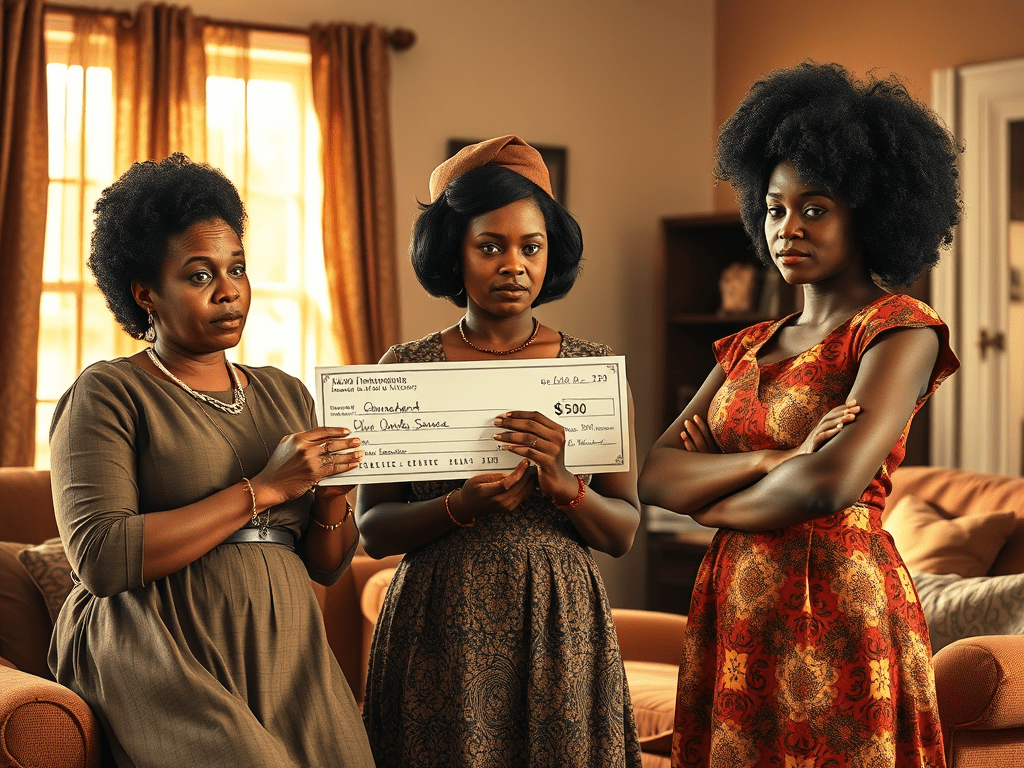
Lorraine Hansberry’s A Raisin in the Sun is packed with powerful themes about race, class, dreams, and identity, but one of its most compelling aspects is the strength of its female characters. Lena (Mama), Ruth, and Beneatha are more than just supporting figures in Walter Lee’s story—they are complex women who challenge traditional gender roles, navigate the intersection of race and gender, and, in Beneatha’s case, reflect the changing times of the late 1950s.
Challenging Traditional Gender Roles
In the 1950s, women were largely expected to be homemakers, supporting their husbands and raising children. But in A Raisin in the Sun, the women in the Younger family push against these expectations in different ways.
Lena, or Mama, is the matriarch of the family. While she is a deeply traditional woman who values faith, family, and hard work, she also asserts authority in ways that challenge the idea that men are the sole decision-makers. She is the one who holds the insurance check after her husband’s death, and she ultimately decides how it should be used. When Walter is too focused on money and personal ambition, she steps in, buying a house in a white neighborhood to secure a better future for the family. Her strength shows that motherhood is not just about nurturing—it’s about leadership, too.
Ruth, Walter’s wife, presents a quieter but equally powerful resistance to traditional gender roles. She works as a domestic servant, contributing financially to the household. When she learns she is pregnant, she faces an incredibly difficult decision: whether to have the baby or seek an abortion. Though abortion was illegal at the time, Ruth’s contemplation of it signals her desperation and the limited choices available to women, especially Black women, who struggled economically. Ruth’s situation highlights the emotional and financial burdens placed on women and emphasizes her agency in making tough decisions.
Then there’s Beneatha. Unlike Mama and Ruth, Beneatha openly rejects the traditional roles expected of women. She is ambitious, wants to become a doctor, and refuses to define her future around a man. When her brother mocks her aspirations, she stands firm. Her relationships with George Murchison and Joseph Asagai further illustrate her defiance of societal expectations. George, who comes from a wealthy Black family, expects her to be beautiful and obedient, while Asagai encourages her intellectual and cultural growth. Beneatha’s refusal to settle for a superficial relationship with George reflects her desire for something deeper—both in love and in life.
The Intersection of Race and Gender
For Mama, Ruth, and Beneatha, gender struggles don’t exist in a vacuum. Their experiences are shaped by the fact that they are both women and Black. This intersection of race and gender means they face compounded discrimination and limited opportunities.
Mama and Ruth, for example, live in a world where Black women’s labor is often undervalued. Ruth works as a domestic worker, a job that was (and still is) disproportionately held by Black women and underpaid. Mama, despite her wisdom and strength, has spent her life cleaning white people’s houses and serving others. Her desire to buy a home in a better neighborhood is not just about moving up economically—it’s about claiming dignity and agency in a world that often denies it to Black women.
Beneatha’s struggles highlight a different but related issue: the expectations placed on educated Black women. As a young woman pursuing a career in medicine, she faces skepticism, even from her own family. Walter mocks her ambitions, and George dismisses her intellectual pursuits as unnecessary. Beneatha’s identity as both Black and a woman means she must constantly prove herself in ways that her male counterparts do not.
Beneatha: A Reflection of Changing Times
Of all the women in A Raisin in the Sun, Beneatha is the most forward-thinking. She embodies the shifting attitudes of the younger generation, especially regarding race, gender, and cultural identity. While Mama and Ruth have largely accepted the struggles that come with being Black women in America, Beneatha actively questions them.
One of the most striking ways Beneatha challenges norms is through her exploration of African identity. Inspired by Asagai, she embraces natural hair and African heritage at a time when European beauty standards dominated American culture. This might seem like a small act today, but in the 1950s, it was revolutionary. Beneatha’s decision to wear her hair naturally is a declaration of self-acceptance and a rejection of assimilationist pressures.
Additionally, Beneatha is deeply critical of traditional gender dynamics. She refuses to see marriage as her only path forward, and she challenges Walter’s narrow view of success. When he complains about their financial situation, she reminds him that there is more to life than money. Her ambition to become a doctor is not just about personal achievement—it’s about breaking barriers for Black women in professional fields.
Conclusion
The women in A Raisin in the Sun are far from passive figures. They push back against societal norms, challenge the limitations placed upon them, and, in Beneatha’s case, represent a new wave of thought about race, gender, and identity. Mama’s leadership, Ruth’s quiet resilience, and Beneatha’s defiance make them some of the most compelling characters in the play. Hansberry’s portrayal of these women is a reminder that the fight for equality isn’t just about race—it’s about gender, too. Their struggles and triumphs remain relevant today, making A Raisin in the Sun a timeless and powerful exploration of what it means to be a Black woman in America.
Works Cited
- Gates, Henry Louis Jr. The Norton Anthology of African American Literature. W.W. Norton, 2014.
- Hansberry, Lorraine. A Raisin in the Sun. Vintage, 1994.
- Taylor, Yuval. African American Women Writers and the Struggle for Freedom. University of North Carolina Press, 2018.

 Education Universe