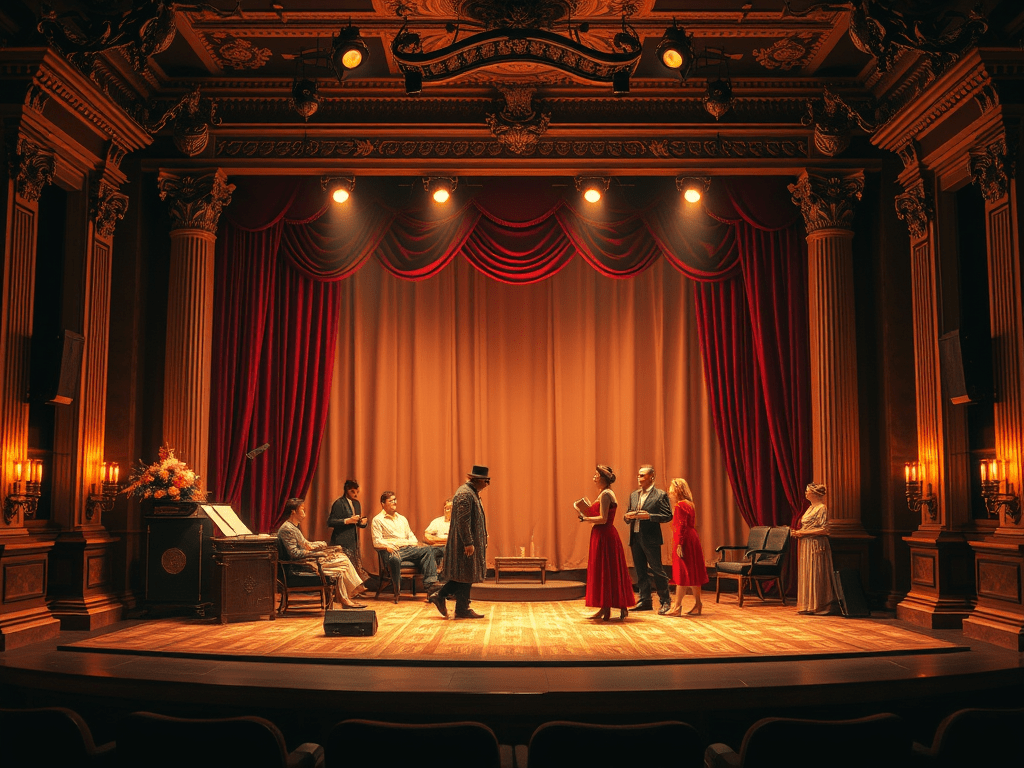
Drama is one of the oldest and most powerful forms of storytelling. From the open-air theaters of ancient Greece to the intimate black box stages of today, drama has continued to evolve while holding onto a set of core elements that define the genre. These elements are the foundation of every play, whether it’s a tragedy, comedy, historical piece, or modern drama. Understanding the basic elements of drama – plot, character, setting, dialogue, theme, and conflict – helps us not only enjoy the experience of theater but also critically analyze and appreciate the choices made by playwrights and performers.
Plot: The Structure of Action
At its core, drama is about something happening. The plot is the sequence of events that unfolds throughout the play. It has a structure that includes exposition, rising action, climax, falling action, and resolution. This structure gives shape to the story and helps the audience follow the progression of events.
For example, in Susan Glaspell’s short play Trifles, the plot is deceptively simple. A group of men and women visit a farmhouse to investigate a murder. While the men dismiss the kitchen and its “trifles” as unimportant, the women slowly piece together the emotional reality of the victim’s life. The plot’s quiet revelations build to a subtle but powerful climax when the women choose not to share their discovery, offering a form of silent justice. The plot does not rely on loud action or confrontation, but on the slow uncovering of emotional truth through observation and intuition.
A well-constructed plot keeps the audience engaged. It raises questions and withholds answers just long enough to create tension. It doesn’t have to be complicated, but it must be intentional and purposeful.
Character: The Heart of the Story
Characters are the people who inhabit the world of the play. They are not just participants in the action—they are the driving force behind it. Characters have desires, flaws, relationships, and histories that inform their choices. Through their actions and dialogue, they reveal the themes of the play.
In Fences by August Wilson, the central character, Troy Maxson, is a former Negro League baseball player who now works as a garbage collector. He is a man full of pride, bitterness, charm, and contradictions. His relationship with his son Cory, his wife Rose, and his friend Bono form the emotional core of the play. Troy’s decisions, shaped by his past and his perception of the world, ultimately lead to conflict and tragedy. Wilson presents Troy not as a hero or villain, but as a fully realized man shaped by social and personal limitations.
Characters don’t need to be likable, but they do need to be believable. The audience must understand their motivations and see the logic in their choices, even if they disagree with them. Well-developed characters are essential for creating drama that resonates beyond the stage.
Setting: Time and Place with Purpose
Setting refers to the time and place in which a play takes place. It includes physical locations, historical periods, and even the emotional atmosphere of a scene. A strong setting does more than just tell the audience where things happen – it adds depth, supports the theme, and can even act as a character itself.
In Trifles, the setting is a rural farmhouse kitchen in the early 1900s. This space is crucial to understanding the emotional world of the absent female character, Mrs. Wright. The unfinished sewing, the broken jars of preserves, and the damaged birdcage all speak to the isolation and emotional strain of her life. The kitchen is not just a backdrop; it tells a story that the men in the play are unable or unwilling to hear.
In Fences, the backyard serves as a symbolic space where much of the action unfolds. It is a place of work, conversation, conflict, and construction. Troy’s repeated attempts to finish building a literal fence reflect his emotional need to control the boundaries of his life, even as relationships around him begin to fall apart. The setting here supports the play’s themes of protection, division, and legacy.
A well-used setting reinforces the mood and helps the audience immerse themselves in the world of the play. It can suggest themes without needing explicit dialogue and offer insight into characters’ lives.
Dialogue: The Language of Drama
Unlike novels, where inner thoughts can be directly shared with the reader, drama must rely on dialogue to reveal characters’ thoughts, emotions, and motivations. Every line of dialogue in a play serves a purpose. It can move the plot forward, reveal character relationships, or deepen the theme.
In Fences, August Wilson writes with a rhythm and style rooted in African American vernacular. His dialogue is rich with metaphor, repetition, and emotional truth. In one memorable moment, Troy tells Cory that he doesn’t have to like him, he just has to take care of him. This short exchange speaks volumes about Troy’s worldview, shaped by struggle and hard-earned responsibility. It also highlights the emotional gap between father and son.
In Trifles, the women’s quiet observations and side conversations carry the emotional weight of the play. Their seemingly trivial dialogue slowly uncovers a history of neglect and emotional abuse. The restraint in their words creates a contrast with the louder, more dismissive talk of the men, underlining the play’s themes of gender roles and overlooked perspectives.
Strong dialogue reflects how people actually speak, but with intention. It must reveal character, drive the story, and avoid unnecessary filler. In theater, every word counts.
Theme: The Underlying Message
Every good play says something larger than the story it tells on the surface. The theme is the central idea or question the play explores. It can be social, political, personal, or philosophical. Themes give the story weight and make it worth remembering.
In Trifles, the theme centers on gender roles, justice, and the value of female experience. The play quietly critiques a society that dismisses women’s voices and the knowledge they carry. Through the unraveling of a domestic mystery, Glaspell raises questions about what counts as evidence, and who gets to decide.
In Fences, themes include race, fatherhood, loyalty, failure, and the burden of history. August Wilson’s play examines how personal dreams are shaped, and often crushed, by systemic limitations. The fence Troy builds becomes a central symbol, representing both protection and separation, connection and isolation.
Themes are not always spelled out. In fact, the most effective plays allow the audience to draw conclusions for themselves. A good theme lingers long after the final curtain.
Conflict: The Engine of Drama
Conflict is what drives the story. It is the tension between opposing forces, whether they are between characters, within a character, or between a character and society. Without conflict, there is no story, just a series of events.
In Fences, conflict is everywhere. Troy is in conflict with his son Cory, who wants to play football. He is in conflict with his wife Rose after his betrayal comes to light. He is in conflict with his past, his race, his lost dreams, and even death itself. These layers of conflict make the play emotionally rich and dramatically compelling.
In Trifles, the conflict is quieter but just as meaningful. It lies in the tension between what is spoken and what is unspoken, between law and justice, and between male authority and female intuition. The women’s decision to remain silent at the end of the play resolves the central moral conflict in a way that challenges the audience’s expectations.
Conflict creates stakes. It forces characters to make choices and deal with consequences. It keeps the audience invested, wondering what will happen next.
Conclusion
Theater is a powerful art form because it brings together so many elements such as language, movement, space, emotion to tell human stories in real time. The six essential elements of drama (plot, character, setting, dialogue, theme, and conflict) are the tools playwrights use to build these stories. Whether the play is ancient or modern, tragic or comic, these elements remain at the core of the experience.
By learning to identify and analyze these elements, audiences become more than just spectators. They become active participants in the interpretation of the play. They start to notice how a single line of dialogue, a pause, or a stage prop can carry deep meaning. And that awareness is what makes theater such a rich and rewarding experience.
Works Cited
“Elements of Drama.” Study.com, IXL Learning, https://study.com/learn/lesson/elements-of-drama-characters-setting-symbolism-parts-of-a-play.html. Accessed 19 Oct. 2025.
“Elements of Drama – Literature for the Humanities.” FSCJ Pressbooks, Florida State College at Jacksonville, https://fscj.pressbooks.pub/literature/chapter/elements-of-drama/. Accessed 19 Oct. 2025.
“Essential Elements of Drama to Know for Intro to Theatre Arts.” Fiveable Library, https://library.fiveable.me/lists/essential-elements-of-drama. Accessed 19 Oct. 2025.
“37 Powerful Elements of Drama & Free Infographic.” The Drama Teacher, https://thedramateacher.com/dramatic-elements/. Accessed 19 Oct. 2025.
“Decoding the 6 Aristotelean Elements of Drama.” Playwrights’ Center, https://pwcenter.org/article/decoding-the-6-aristotelean-elements-of-drama/. Accessed 19 Oct. 2025.

 Education Universe